







































Head to Head: Family Simulator Beach Games Against High School Teacher Games Life
Casual simulation games often turn familiar routines into light, accessible entertainment. Family Simulator Beach Games and High School Teacher Games Life follow that formula while exploring very different settings. One focuses on a family vacation filled with seaside activities, while the other places players inside the busy daily life of a schoolteacher.
Which game offers the better experience? This detailed comparison examines the graphics, gameplay mechanics, variety, and overall fun factor of these two casual simulation games.
Two Different Approaches to Everyday Simulation
Both titles are designed around straightforward objectives and approachable controls rather than deep strategic systems. However, their themes create distinct moods. Family Simulator Beach Games aims for cheerful holiday escapism, whereas High School Teacher Games Life uses classroom duties and school management scenarios to provide a more structured experience.
Family Simulator Beach Games
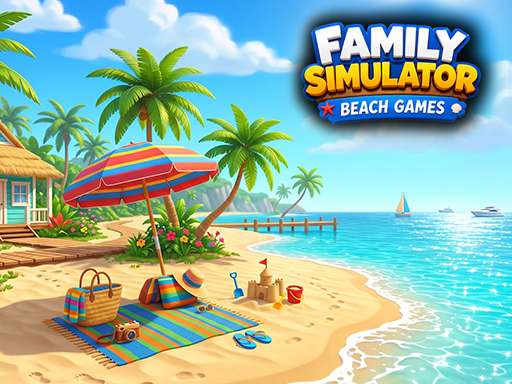
Family Simulator Beach Games presents a colorful virtual vacation in which players take part in family-friendly beach activities. Its premise is immediately inviting: visit seaside locations, interact with family members, and complete simple missions built around recreation and travel.
Graphics and Beach Atmosphere
The game’s visual presentation emphasizes bright colors, sunny environments, and easily recognizable objects. Sandy beaches, blue water, vacation clothing, and playful props help create a relaxed atmosphere. Character models and animations are generally designed for clarity rather than realism, which suits the game’s casual identity.
Environmental variety is particularly important in a beach simulator, and the changing activities help the locations feel more animated. Although players should not expect highly detailed textures or sophisticated visual effects, the cheerful art direction communicates the holiday theme effectively. The presentation is likely to appeal most to younger players and anyone looking for uncomplicated virtual escapism.
Gameplay Mechanics and Activities
Gameplay revolves around completing short objectives, moving between locations, and participating in beach-themed mini-games. These tasks may involve preparing for an outing, helping family members, exploring the shore, or interacting with recreational equipment. Simple touch-friendly controls make individual activities easy to understand.
The mission-based structure provides frequent goals and keeps the experience moving. Its main limitation is repetition: once players understand the basic interaction pattern, later objectives can begin to feel familiar. Nevertheless, the variety of vacation scenarios gives the game a pleasantly energetic pace, especially during shorter sessions.
High School Teacher Games Life
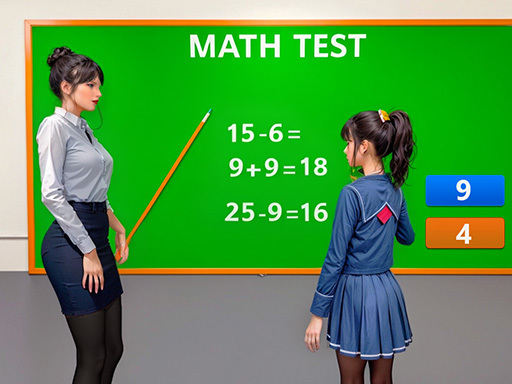
High School Teacher Games Life exchanges the open beach for classrooms, corridors, and school responsibilities. Players step into the role of a teacher and complete tasks associated with managing lessons and navigating a busy academic environment.
Graphics and School Presentation
The school setting gives this game a more organized visual identity. Desks, boards, books, hallways, and student characters make each objective easy to interpret. Its environments may feel less vibrant than the tropical locations of Family Simulator Beach Games, but the familiar campus design supports the central role-playing fantasy.
Character animation and environmental detail remain functional rather than technically ambitious. Even so, the visual cues are effective: players can quickly identify classrooms, task locations, and interactive items. This clarity is valuable in a game built around moving efficiently from one responsibility to another.
Teaching Mechanics and Mission Structure
High School Teacher Games Life uses a more responsibility-driven gameplay loop. Instead of focusing primarily on recreation, missions revolve around classroom routines and teacher-related duties. This produces a stronger sense of role-play, as each assignment contributes to the fantasy of managing school life.
The objectives are still accessible, relying on guided instructions and uncomplicated interactions. However, the structured setting makes progression feel more purposeful. Players who enjoy checklists, time-based duties, and workplace simulation may find this approach more engaging than the looser collection of beach activities.
Which Game Has the Better Fun Factor?
Family Simulator Beach Games is the more immediately cheerful option. Its colorful setting and playful activities make it well suited to brief sessions, and the family-vacation theme rarely feels demanding. It is the stronger choice for players who want relaxation, visual brightness, and mini-game variety.
High School Teacher Games Life offers a more focused simulation concept. The teaching role connects its missions through a consistent identity, making the experience feel more structured. Players interested in school scenarios or profession-based role-playing are likely to remain engaged for longer.
Final Verdict
In this comparison, High School Teacher Games Life has a slight advantage in gameplay cohesion because its classroom duties support a clearer role and progression loop. Family Simulator Beach Games, however, wins in atmosphere, visual energy, and carefree entertainment.
The better game ultimately depends on personal preference. Choose Family Simulator Beach Games for a light virtual holiday packed with sunny activities. Choose High School Teacher Games Life for structured missions and a more convincing everyday-life simulation. Both deliver accessible casual fun, but they cater to different kinds of players.